Share

Quick Answer
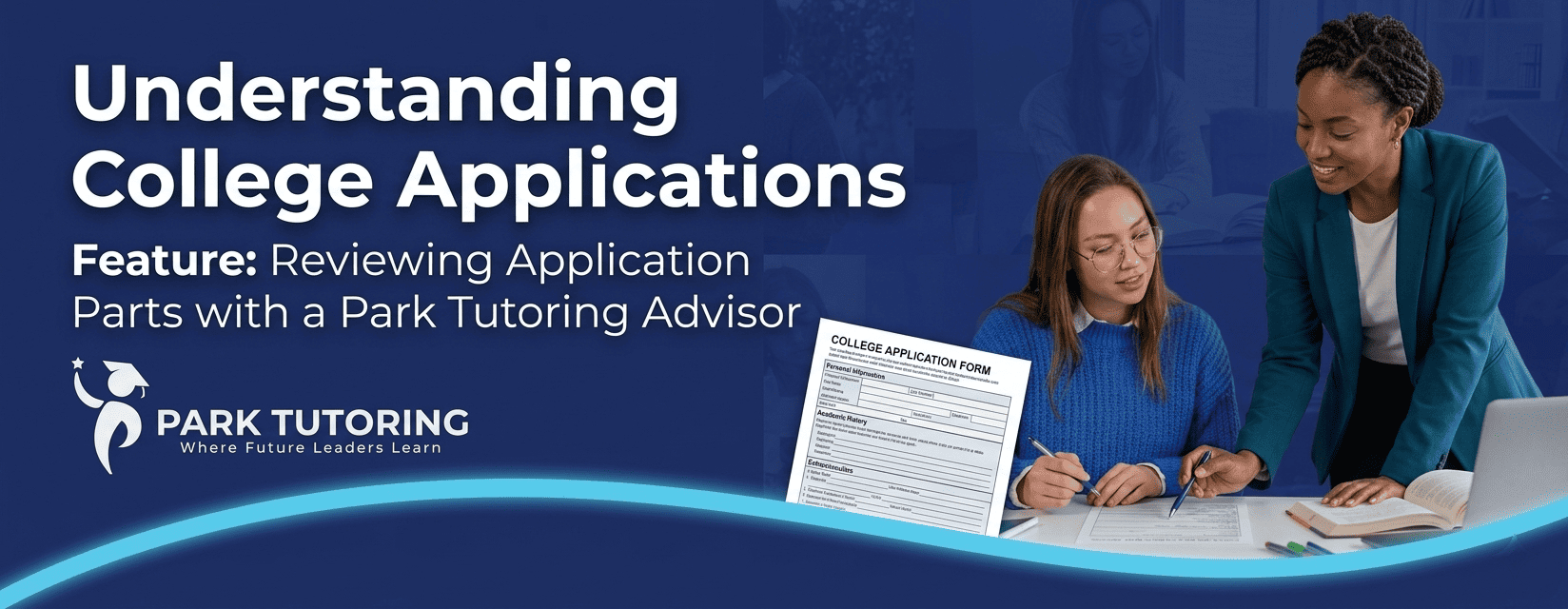
A college application typically includes an online form, transcript, test scores when required, recommendation letters, personal and supplemental essays, and an activities list. Some colleges may also request interviews or portfolios. Students often complete one shared application platform, such as Common App or Coalition App, and then add school-specific questions, essays, and requirements for each college.
Key Takeaways
- Most applications flow through one of three platforms: the Common App, the Coalition App, or a school's own direct portal.
- The core pieces repeat everywhere: personal info, academic history, test scores, essays, activities, and recommendations.
- The personal statement runs 250–650 words and is the one essay nearly every school reads.
- Supplemental essays change by school and often ask "why us" or answer a prompt specific to that campus.
- Recommendation letters usually come from a counselor plus one or two teachers, and they submit these themselves.
- Deadlines split into three types — Early Decision, Early Action, and Regular Decision — each with its own rules.
If you've never filled one out, a college application looks like a wall of confusing forms. It isn't. Once you've seen a few of them, you notice the same handful of pieces showing up over and over, no matter which school sits at the top of the list. Here's what's actually inside, roughly in the order you'll fill it out.
What are the main parts of a college application?
Six pieces make up nearly every college application: the form itself, academic history, test scores, essays, letters of recommendation, and an activities list. Every school wants some version of each, but the exact requirements shift school to school — and that's where students trip up.
Here's the typical breakdown:
|
Component |
What it includes |
Who provides it
|
|---|---|---|
|
Application form |
Personal, family, and demographic info |
Student |
|
Academic history |
Transcript, course list, GPA |
School counselor |
|
Test scores |
SAT/ACT (if required), AP scores |
Testing agency or student self-report |
|
Essays |
Personal statement + supplements |
Student |
|
Recommendations |
Counselor letter + 1–2 teacher letters |
Counselor/teachers |
|
Activities list |
Clubs, jobs, sports, volunteering |
Student |
Some schools tack on a portfolio for art, music, or film, a graded writing sample, or an interview. Community colleges and public systems like the Cal States mostly skip essays and recommendations, leaning on the form, transcript, and test scores instead. Selective private colleges want everything on the table above, plus two or three extra essays you didn't ask for.
What platform do I use to apply?
Most students go through the Common App. A smaller group uses the Coalition App, and some schools only take a direct portal they built themselves. Which one you use comes down to who's on your list.
- Common App: Accepted by most private colleges and a good chunk of public universities too. Fill out one profile once — personal info, academics, activities, the personal statement — then attach school-specific questions for each college you add.
- Coalition App: Fewer schools use it, and some overlap with Common App. The layout is different. What it's actually asking for isn't.
- Direct portals: Systems like the University of California, Cal State, and University of Texas run their own separate application. No Common App, no Coalition. Their own essay prompts, their own deadlines.
Here's the edge case that trips up half our students: applying to both a private school and a UC means running two systems at once, with two personal statement prompts and two sets of dates that don't line up. Start a shared tracker in the spring. You'll thank yourself in October.
What does the application form itself ask for?
The form collects basic identifying information, family and household details, and your full academic and extracurricular history. This part isn't glamorous. It's the administrative skeleton of the whole application, and accuracy matters more than polish here.
You'll answer questions about your legal name and contact info, citizenship and residency status, your parents' education and occupation, every high school you've attended, your intended major, and whether you're applying for aid. Then you'll list every activity, job, and leadership role — hours per week, years involved, the whole thing.
Here's the detail most families miss: colleges ask you to self-report your courses and grades, and that self-report has to match your official transcript exactly. List a grade wrong, even by accident, and your transcript disagreeing with your form can trigger a request for clarification from the admissions office. That's an annoying email to get in December. Check this section against your real transcript before you hit submit.
What essays will I have to write?
Nearly every selective college wants a personal statement plus one or more supplements. The personal statement travels to every school on your list unchanged. Supplements are written fresh, school by school.
The personal statement
On the Common App this is one essay, 250 to 650 words, chosen from a handful of prompts about identity, a challenge, growth, or whatever topic you pick. Write it once, and it goes out to every school untouched. Spend the most time here. It's the one essay every single reader will see, so it earns the most drafts, not the fewest.
Supplemental essays
Shorter, school-specific, usually 100 to 400 words. "Why this major," "why this school," or some quirky prompt unique to that campus. A student applying to eight schools can easily end up writing ten to fifteen of these, since a few schools ask for two or three each.
Activity descriptions
Most platforms also want a short blurb — around 150 characters — describing each major activity. Think resume line, not essay. Keep it specific.
What role do test scores play?
Test scores matter, but how much depends entirely on the school's policy. Plenty of colleges are test-optional now, meaning you decide whether to send SAT or ACT scores at all. Others are test-required. A few are test-blind and won't look at scores no matter what you send.
If a school is test-optional, a strong score can still help your file. A weak one? Leave it out. If a school is test-blind, don't bother sending anything — it won't be read. AP scores are a separate matter entirely; some schools use them for credit or placement rather than admission, so you usually report those after you're already enrolled, not during the application.
Here's an edge case we see constantly: a student takes the SAT three times and doesn't know what to send. Most colleges allow "score choice," so you send only your best sitting. A handful still require everything. Check the specific policy for each school before you submit — these change year to year, and guessing wrong costs you nothing but time.
Who writes my letters of recommendation, and how does that work?
Recommenders submit letters directly. You never see the final version — you request it, then track whether it's actually been sent. Most schools want a counselor letter plus one or two from teachers.
The usual setup:
- Counselor letter: Nearly every school that requires recommendations wants this one. Your counselor also submits the transcript and a "school report" covering course rigor, rank if your school ranks, and general school context.
- Teacher letters: Selective schools usually want one or two, ideally from core academic subjects — English, math, science, history, a language — rather than an elective, since these speak to how you'll handle college coursework.
- Additional letters: A coach, employer, or mentor letter is optional, and only worth adding if it says something the academic letters don't.
Ask early. Several weeks minimum, and honestly, earlier is better. Teachers write dozens of these every fall and need lead time to do it well. If someone declines or is already overloaded, have a backup teacher in mind rather than scrambling for one in November.
How do deadlines and application rounds work?
Applications come due under one of three plans — Early Decision, Early Action, or Regular Decision — and which plan you pick changes both your deadline and what you're committing to.
- Early Decision (ED): Binding. Get in, and you're going. Deadlines land in early November, decisions in December.
- Early Action (EA): Non-binding. Apply early, hear back early, still free to apply elsewhere and decide later. Deadlines cluster in November too.
- Regular Decision (RD): The standard track. Deadlines usually in January, decisions arriving through the spring.
Some schools run an ED II round too — a second binding option with a January deadline, useful for students who missed the first ED window or changed their mind about a top choice. Rolling admission, common at public universities, reviews applications as they come in instead of all at once. Apply earlier in a rolling cycle and your odds genuinely improve, simply because more seats are still open.
What common mistakes should I avoid?
- Confusing application deadlines with financial aid deadlines. These are almost always different dates on different forms — FAFSA, CSS Profile — and missing the aid deadline can cost real money even when the application itself is fine.
- Reusing one essay for every supplement. Admissions readers can spot a recycled essay from a mile away. Specificity about the actual campus and program is what sells it.
- Leaving the activities list vague. "Volunteer," with no detail, tells a reader almost nothing. A specific role, hours, and impact reads as credible. Vague reads as filler.
- Waiting until senior fall to ask for recommendations. Rushed requests produce rushed letters, and some teachers simply won't have room to take you on that late.
- Sending test scores you didn't need to send. At a test-optional school, a weak score can actively hurt you where silence wouldn't have.
- Treating the personal statement as an afterthought. Supplements feel more "school-specific," sure, but the personal statement is the one essay every reader sees. It deserves the most drafts, not the leftovers.
|
Need a hand with college counseling? Park Tutoring's college counselors help students map out every piece of the application — deadlines, essay strategy, recommendation timing — while coaching them to write and revise their own essays instead of writing it for them. We build a plan that's realistic for your timeline, so nothing gets missed and every part of the application actually sounds like you wrote it. → Book a free consultation at parktutoring.com |
How do I actually get started on my application?
Create accounts on whatever platforms your target schools use, then build one spreadsheet with every deadline, essay prompt, and recommendation request on it — before you write a single word. Order matters more than speed here.
A sequence that actually works: draft your Common App personal statement and lock in your college list during spring or summer before senior year. Request recommendation letters over the summer, while teachers still have a full break ahead of them to write something thoughtful. Early fall, fill out the form itself and start supplements for your earliest-deadline schools first. By October, submit anything due for Early Action or Early Decision, then keep writing Regular Decision supplements through December. The whole time, track confirmations for every piece — form, transcript, scores, each letter — because colleges generally won't review a file until every single component has landed.
Frequently Asked Questions
Details
Date
Oct 02, 2026
Updated
Oct 03, 2026
Author
Park Tutoring
Category
Reading
9 Min