Share

Quick Answer
Choose a personal story, write in your own voice, revise for clarity, and avoid generic topics. Start early, stay within the 250–650-word Common App limit, and get feedback before submitting.
Key Takeaways
- Start brainstorming at least three to four months before your first deadline, not the week it's due.
- A small, specific moment usually beats a big, general life story.
- Your natural voice matters more than sophisticated vocabulary — admissions officers can tell when an essay sounds coached or thesaurus-driven.
- The Common App personal statement has a strict 250–650 word limit, and going under or over creates real problems.
- Supplemental essays deserve as much care as the main essay since many schools weigh them heavily.
- Revision should focus on cutting, not adding — most first drafts run too long and too vague.
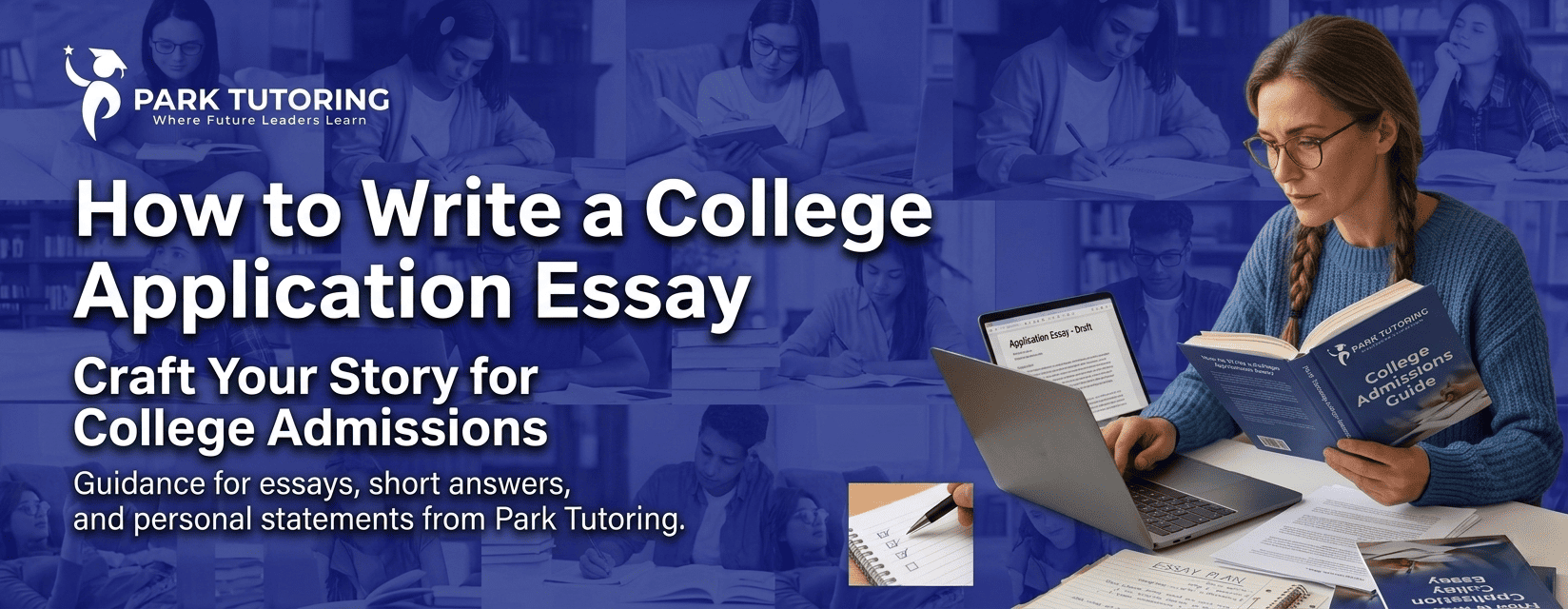
The college essay is the part of the application that scares students the most — and the part most misunderstood. It isn't a research paper. It isn't your resume dressed up in sentences. It's a short, personal piece that helps an admissions officer picture an actual person behind the transcript. This guide covers how to write a college application essay step by step, from finding a topic to submitting a draft you're not embarrassed by.
What is a college application essay, exactly?
A college application essay is a short personal narrative. It gives admissions officers a sense of your character and how you think — the stuff grades and test scores can't show. It is not a summary of your accomplishments. That's what the activities list is for.
Most students write one main essay, the personal statement, plus a handful of shorter supplements specific to each school. The personal statement usually goes through the Common App, the Coalition App, or a school's own portal, and every college on the Common App sees the identical essay. Supplements ask narrower questions — why this major, why this school, sometimes something oddly specific like what word best describes you.
Nobody's trying to impress an admissions reader with big vocabulary or a dramatic life event. These readers get through thousands of essays a season. What actually stands out is a voice that sounds like a real person, not a polished stranger. This is the one section of the application where you get to talk directly, in your own words, about how you see things — no thesis statement required.
How do I actually start writing my college essay?
Start by listing five or six small, specific moments from your life. Do this before you write a single sentence of the actual essay. Most students freeze right here, because they're hunting for "the perfect topic" instead of just generating raw material to work with.
Try this: set a timer for ten minutes and write down memories tied to a challenge, a shift in how you saw something, a place that matters to you, a person who shaped you, or a time you were quietly proud of something small. Don't judge the list yet. Just get it down.
Once you've got options, pick the one or two moments that feel most specific — the ones least likely to show up in someone else's essay too. A story about losing a debate tournament and what it taught you about humility beats "I learned the importance of hard work playing varsity soccer" every time. That second one, we've read a hundred times.
From there, write a messy first draft. Don't worry about word count. Don't worry about the opening line. A lot of students get stuck trying to nail that first sentence before they've even figured out what the essay is about. Write the middle first if that's what unsticks you.
How do I choose a good essay topic?
A good topic is specific and personal, and it reveals something the rest of your application doesn't already show. The strongest essays are usually about ordinary moments handled with real honesty, not extraordinary events handled with a lot of adjectives.
Ask yourself one question: does this story only make sense coming from me? If ten other applicants could plausibly write the same essay about the same general topic, it's too broad. "Moving to a new school" is broad. The exact moment you realized you'd missed a friend's inside jokes, or the small humiliation of not knowing where to sit in a new cafeteria — that's specific, and that's yours alone.
Topics that tend to work well:
- A specific relationship or conversation that shifted how you think
- A skill, hobby, or interest you're unusually invested in, gone into with depth instead of listed
- A mistake or failure and what you actually did with it afterward
- A tension or contradiction in your identity, community, or beliefs
Topics to be careful with — not off-limits, just harder to pull off: a sports injury, a mission trip, a grandparent's death, the general "I learned to work hard" arc. These can absolutely work if the details are sharp and the reflection is real. The topic itself is rarely the problem. The generic treatment of it is.
What should the structure of a college essay look like?
There's no required structure. Most strong essays open on a concrete scene, move through some reflection, and land on growth or insight instead of restating the topic. Skip the five-paragraph essay format — this isn't a thesis-statement assignment for English class.
A shape that works for most students:
|
Section |
Approximate length |
Purpose
|
|---|---|---|
|
Opening scene |
1–2 short paragraphs |
Drop the reader into a specific moment, not a summary |
|
Context |
1 paragraph |
Explain what's happening and why it matters |
|
Turn or realization |
1–2 paragraphs |
Show the shift in thinking, action, or understanding |
|
Reflection |
1–2 paragraphs |
Connect the moment to who you are now or what you value |
|
Closing |
2–4 sentences |
Land on an insight, not a summary of the essay |
Some essays are built around a single extended metaphor, a list, or a repeated phrase, and formats like these can work well. But they're riskier and take more drafting to land cleanly. If you're not sure your creative structure is actually working, default to the scene-to-reflection shape above. It's dependable because admissions readers can follow it fast, without having to work to figure out what you're doing.
How long should a college essay be?
Word limits are strict, and they vary by platform and school, so check the exact limit before you start writing anything. The Common App personal statement has to land between 250 and 650 words. There's no wiggle room — the online form won't let you submit over it.
Supplemental essays swing widely, anywhere from a 50-word "why us" response to a 500-word prompt, and two schools can ask nearly the same question with two different limits. Schools using their own portals instead of the Common App set their own rules entirely, so don't assume anything carries over between applications.
A common mistake is treating the word limit like a target instead of a ceiling. A 650-word limit doesn't mean every essay needs to hit 650 words. A tight, well-written 500-word essay that says something real beats a padded 650-word one every single time. On the short end, a 50-word answer still needs one concrete detail in it. "I love your school's community!" wastes the space you were given.
What are the most common mistakes students make?
- Writing about a topic that's too broad. Essays about "my love of travel" or "why I want to help people" stay abstract because there's no scene anchoring them to anything real. Narrow it down to one trip, one conversation, one moment.
- Trying to sound impressive instead of honest. Essays loaded with SAT vocabulary or an overly formal tone read as fake. Readers want a real 17-year-old voice, not a corporate memo.
- Listing accomplishments instead of reflecting. The essay isn't the place to restate your resume. If a sentence could sit comfortably in your activities list, cut it.
- Skipping the "so what." Plenty of drafts describe an event well and then just stop. They never say why it mattered. The reflection is usually the weakest part of a first draft, and the part worth fixing first.
- Letting an editor overwrite the student's voice. Well-meaning parents and tutors sometimes rewrite sentences until the essay sounds like an adult wrote it. Admissions officers read tens of thousands of these a year. They notice.
- Ignoring the actual prompt for supplements. A "why this major" essay that never names the major, or a "community" essay with no actual community in it, misses the assignment even if the writing itself is good.
- Submitting a first or second draft. Strong essays go through several rounds. Treating your first complete draft as the final one usually means leaving easy improvements sitting on the table.
How do I revise my college essay?
Revise in passes. Don't try to fix everything in one sitting. Read through once for content only — is the story specific enough, does the reflection say something real? Read again for structure — does the opening earn its spot, does the ending actually land? Only after both of those should you touch word choice and grammar.
One trick that works better than people expect: read the essay out loud. Awkward phrasing and stiff, over-formal language become obvious the second you hear them. If you trip over a sentence reading it aloud, a stranger reading silently will trip over it too.
Get feedback from one or two people who actually know how to give useful notes — a teacher, a counselor, a coach — someone who'll tell you what's not working instead of just saying "nice job." Skip the crowd-sourced feedback. Five different opinions on the same paragraph usually produces a confused, over-edited essay, not a better one.
Cutting beats adding, almost always. If you're bumping up against the word limit, look for sentences that explain something the story already shows, or that repeat a point you've already made once.
|
Need a hand with college counseling? Park Tutoring's college counselors help students find honest topics, build a strong first draft, and revise it through multiple rounds — while making sure the final essay still sounds like the student, not the tutor. We do the coaching. You do the writing. → Book a free consultation at parktutoring.com |