Share

Quick Answer
Ask your teacher in person, at least a month before your first deadline. Follow up with a short email. Bring a brag sheet that lays out your interests, your achievements, and whatever you two shared in class. Pick teachers who actually know your work — not just the ones who handed you an A.
Key Takeaways
- Ask in person first, then confirm in writing. The teacher gets the personal moment and the paperwork.
- Give four to six weeks of notice before your earliest deadline. Less than that and you're asking for a rushed letter.
- A brag sheet does most of the work. It hands your recommender specifics instead of leaving them guessing.
- Junior-year core-subject teachers are usually the strongest pick, especially the ones who watched you grow over a semester.
- A short follow-up email is normal. It's not pushy, it's expected.
- Send a thank-you note after the letter goes in, and tell your recommender where you ended up committing.
Asking a teacher or counselor for a recommendation letter feels like the most socially awkward part of applying to college. It really doesn't need to be. Get the timing right, pick the right person, prep a little, and the whole conversation takes about five minutes. Do that, and you've also set your recommender up to write something that actually sounds like you.
Who should you ask for a letter of recommendation for college?
Ask the teacher who knows your work, not the one who happened to give you the best grade. Most colleges want a letter from a core academic teacher, ideally from junior year, who can talk about how you think and how you've changed since September.
- A teacher who watched you improve, struggle, or push past the syllabus on your own
- A teacher in a subject connected to your intended major, if that fits naturally
- Your school counselor, who writes a separate letter covering the bigger picture
Skip the teacher you picked just because the class was easy and you barely had to try. And skip the one who can't remember your name without checking the roster. Admissions readers can tell within two sentences whether a letter is full of real detail or full of filler.
When is the best time to ask for a recommendation letter?
Ask in the spring of junior year, before senior-year deadlines start piling up on every teacher's desk at once. Missed that window? Aim for four to six weeks before your first deadline — a lot of teachers cap how many letters they'll write each fall, and you don't want to find that out the hard way.
Here's a timeline that keeps you ahead of everyone else scrambling in October:
|
Timing |
What to do
|
|---|---|
|
Spring of junior year |
Ask 1-2 teachers in person; give a heads-up that you'll follow up over the summer |
|
Early summer |
Send a brag sheet and any details about your college list and deadlines |
|
Late August / early September |
Send a polite reminder email once school starts |
|
2-3 weeks before deadline |
Confirm the letter has been submitted through your application portal |
|
After submission |
Send a handwritten or emailed thank-you note |
Wait until October or November of senior year, and you're at the back of the line. Your teacher writes it in less time, with less thought. That shows in the letter.
How do you actually ask, in person?
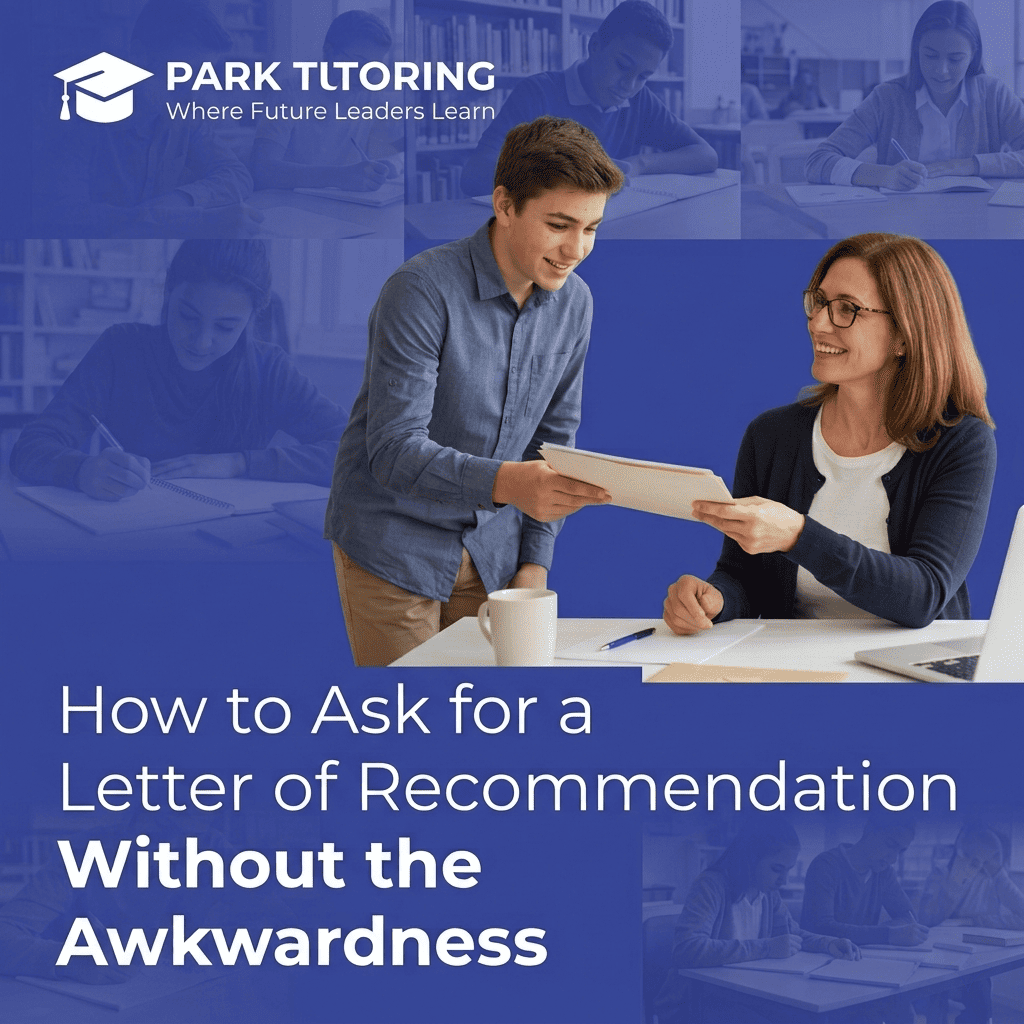
Keep it direct: "Would you be willing to write me a strong letter of recommendation for college?" That word "strong" matters. It gives the teacher an easy out if they don't feel they know you well enough — no awkward conversation required.
Keep the moment low-key. Catch them after class or during office hours. Mention one or two specific reasons you're asking them — a project you liked, a comment they made that stuck with you. Let them know you'll follow up with more details by email. That's the whole ask. Teachers do this every year. They expect it.
What should a recommendation letter email include?
A good recommendation letter email confirms the request in writing and puts everything your teacher needs in one place. Send it within a day or two of the in-person ask, brag sheet attached.
Example 1: Confirming after an in-person ask
Subject: Thank you + recommendation details
Hi Mr. Alvarez,
Thanks again for agreeing to write my letter of recommendation. I've attached a brag sheet with some background on my activities and interests, along with my college list and the earliest deadline (November 1). Let me know if you need anything else from me.
Thanks so much, Maya
Example 2: Asking remotely, without a prior conversation
Subject: Recommendation letter request
Hi Ms. Patel,
I really enjoyed your AP Biology class last year, especially our unit on genetics and the independent project I did on CRISPR. I'm applying to college this fall and wondered if you'd be willing to write me a strong letter of recommendation. I've attached a brag sheet with more details, and my earliest deadline is November 1.
Thank you for considering it, Daniel
Example 3: A polite follow-up reminder
Subject: Quick reminder — recommendation deadline
Hi Mr. Alvarez,
Just a friendly reminder that my Early Action deadline is November 1, and the letter should be submitted through the Common App portal. Please let me know if you need anything else from me — thank you again for your time.
Maya
What is a brag sheet and why does it matter?
A brag sheet is a short document you hand your recommender so they can write something specific instead of something generic. Most counselors and teachers expect one at this point, and a lot of schools even hand you a template.
A solid brag sheet usually includes:
- Your intended major or academic interests
- Extracurriculars, jobs, or family responsibilities that shape who you are
- A memorable class moment, project, or conversation with that specific teacher
- Your college list and the earliest application deadline
- Anything you're proud of that colleges might not otherwise see
This isn't about sounding impressive on paper. It's about giving your recommender enough raw material that the letter reads like it's about an actual person and not a form letter with your name swapped in.
What should you avoid when asking for a letter?
- Don't wait until the last minute. Two weeks before a deadline is not enough time, and it shows in the writing.
- Don't ask a teacher who barely knows you just because the class was an easy A.
- Don't ask over text. A short conversation or a real email tells the teacher you take this seriously.
- Don't go quiet after asking. Send the brag sheet promptly, and check in as the deadline gets close.
- Don't skip the thank-you. Teachers write these on their own time, unpaid. A short note matters more than you'd think.
- Don't ask five teachers "just in case." Most applications need two teacher letters. Asking five and using two just wastes everyone's time.
|
Need a hand with college counseling? Park Tutoring's college counselors help students figure out who to ask, build a genuinely useful brag sheet, and track every recommendation deadline across the college list. We coach you through it so the request, the timeline, and the follow-through are yours — done with confidence, not guesswork. → Book a free consultation at parktutoring.com |
What if a teacher says no or seems hesitant?
Thank them and ask someone else. Don't push. A hesitant yes usually turns into a lukewarm letter, and a lukewarm letter doesn't help you. Sometimes a teacher says no simply because they've hit their limit for the year — it has nothing to do with how they feel about you.
College Counseling with Park Tutoring
Get 1-on-1 help from expert tutors with a plan built around your goals.