Share

Quick Answer
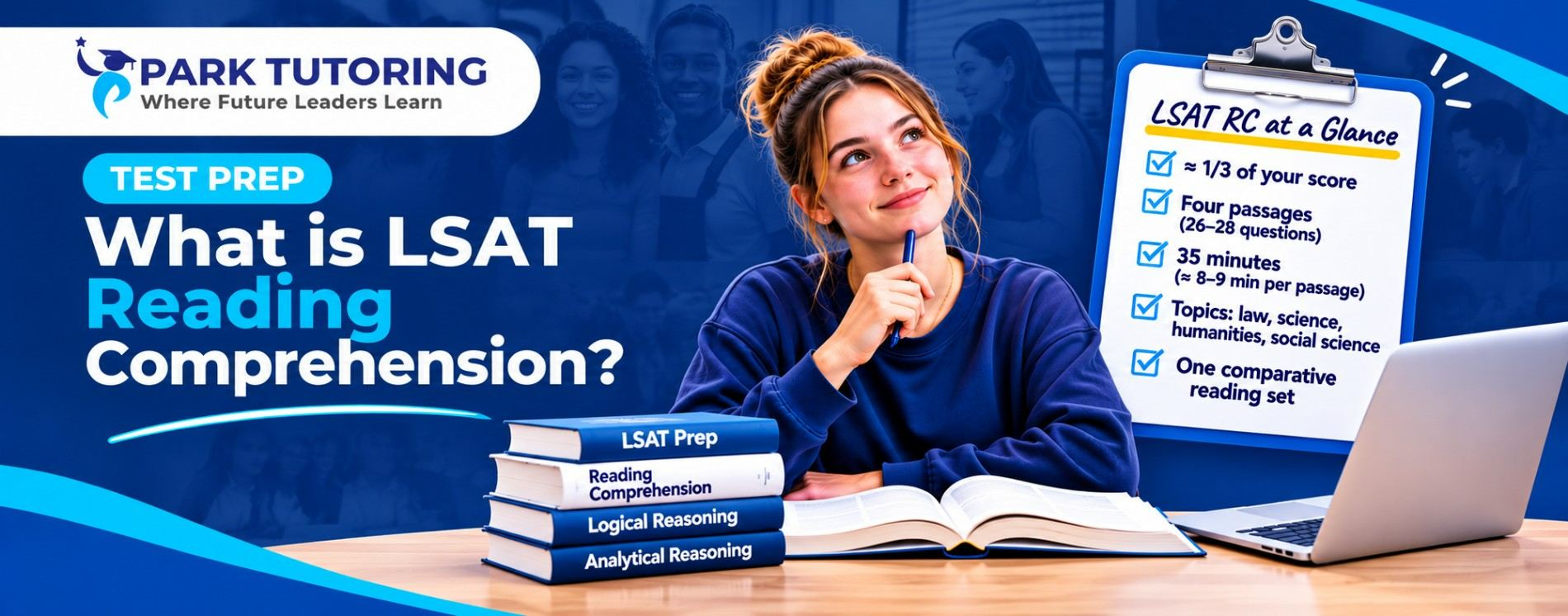
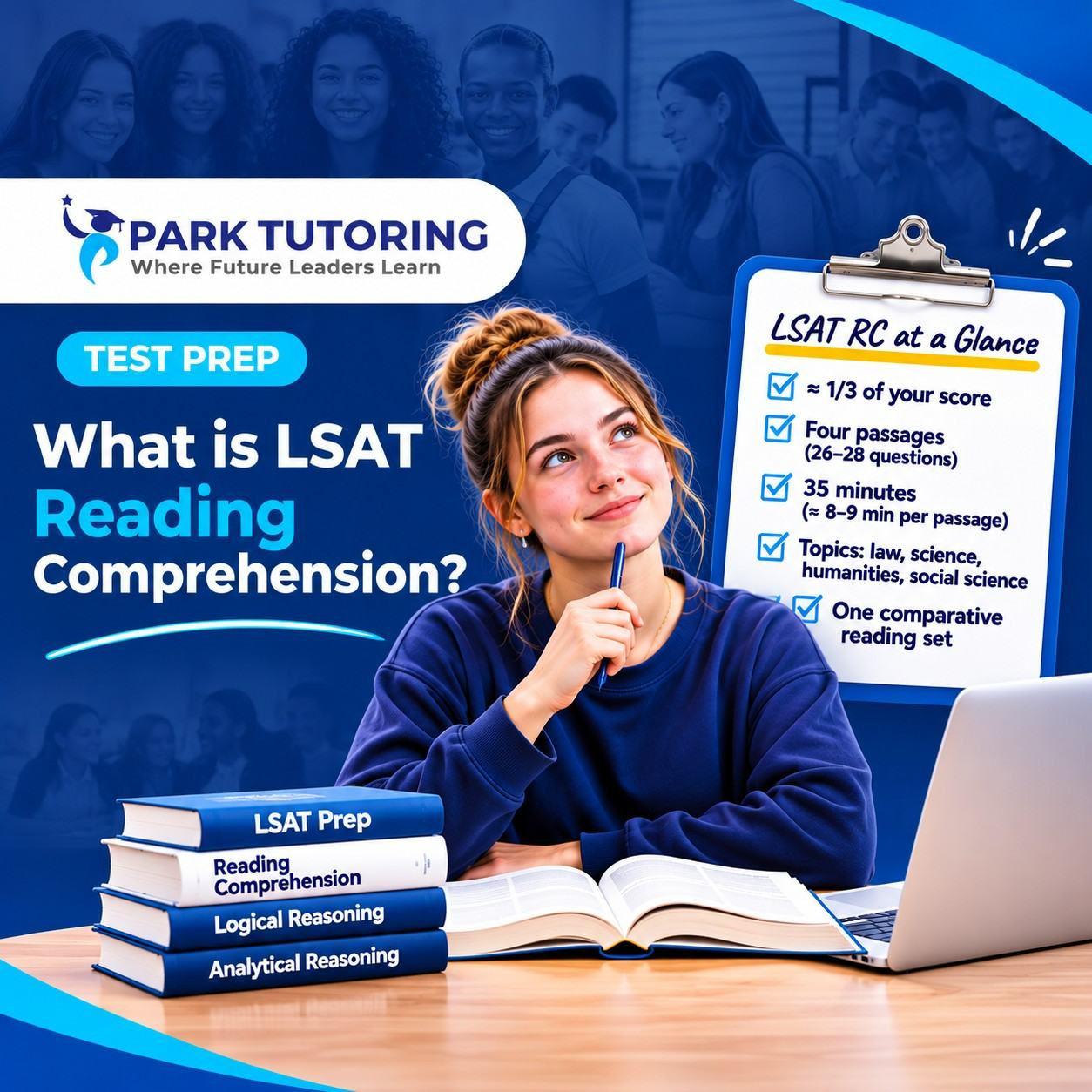
LSAT Reading Comprehension is the section that tests how well you understand dense, unfamiliar passages. You read four passages of roughly 400 to 500 words and answer 26 to 28 questions in 35 minutes. One set is usually comparative reading, with two shorter passages on the same topic. The section makes up about one-third of your LSAT score.
Key Takeaways
- It's about a third of your score. It's one of three scored sections.
- Four passages in 35 minutes. That's about 8 to 9 minutes per passage.
- Topics rotate across four areas. Law, science, humanities, and social science.
- One set is comparative reading. Two shorter passages on one topic.
- Structure beats detail. Track the main point and the author's view.
- It gets longer in August 2027. Six passages in 52 minutes.
Reading Comprehension can feel like the hardest section to improve. Students often assume it's a raw reading-speed test, so they read faster and get more questions wrong. In reality, it rewards a specific way of reading that you can learn. This guide covers how the section works, the passage and question types, a reading strategy that works, and how to manage your time. Most students can improve with the right method and steady practice.
What is LSAT Reading Comprehension?
LSAT Reading Comprehension measures how well you read and understand complex texts like the ones you'll see in law school. Each passage is followed by questions about its meaning, structure, and the author's views. It's the closest the LSAT comes to the reading you'll do in your first year.
The passages are dense and often on unfamiliar topics. That's intentional. Law students regularly read material outside their background, and the LSAT tests whether you can follow a complicated argument without prior knowledge. A passage about art history isn't testing what you know about art history.
Everything you need is in the passage. You won't be asked about outside facts, and bringing in your own opinions or knowledge is one of the fastest ways to choose a wrong answer. If an answer sounds right but the passage doesn't support it, it's wrong.
How is the Reading Comprehension section structured?
The current LSAT has one scored Reading Comprehension section with four passages, 26 to 28 questions, and a 35-minute time limit. The passage stays on screen while you answer, so you can always go back to it.
Each passage is roughly 400 to 500 words and comes with five to eight questions. That gives you about 8 to 9 minutes per passage, including reading time. Passages with more questions deserve a little more time, since every question counts the same.
Your test may also include an unscored section that's Reading Comprehension. It looks the same as the scored one, so give it the same effort. You won't know which section is unscored, so treat each one as real.
What types of passages appear on the LSAT?
Passages come from four broad subject areas, plus one special format. Knowing what to expect makes unfamiliar topics feel less intimidating. Every area uses the same core question types.
Law and social science passages
Law passages often discuss legal theories, court decisions, or policy debates. Social science passages cover topics like economics, psychology, or history. Both usually present competing viewpoints. Track which view the author favors.
Science and humanities passages
Science passages explain research, discoveries, or debates between scientists. Humanities passages cover art, literature, or philosophy. Science passages can feel technical, but the questions focus on the argument, not the technical details. Don't get stuck on terms you don't recognize.
Comparative reading
One set usually has two shorter passages on the same topic. Questions ask how the authors agree, disagree, or approach the topic differently, so track each author's view separately. The questions require holding two views at once.
What questions does Reading Comprehension ask?
Questions fall into a few main types: main point, author's attitude, specific details, inferences, and the function of a part of the passage. Naming the question type quickly saves time.
Main point questions ask for the passage's central idea. Attitude questions ask how the author feels about a view. Detail questions ask what the passage says directly, while inference questions ask what it supports without stating outright. Inference answers still stay close to the text.
Function questions ask why the author included a paragraph, example, or phrase. These reward understanding the passage's structure, which is why reading for structure matters so much. If you know what each paragraph does, these questions get much easier.
How should you read an LSAT passage?
Read actively for structure: the main point, the author's view, and what each paragraph does. Don't try to memorize every detail. Your goal is a clear map of the passage, not perfect recall.
As you read, note in a few words what each paragraph does, such as "introduces theory" or "critic's objection." Pay attention to words that show attitude, like "unfortunately" or "compelling," and to shifts like "however" or "but." These signals often point straight to the questions you'll be asked.
When a question asks about a specific detail, go back to the passage to confirm it. Knowing where information is located is more useful than trying to remember it. Many points are lost by answering from memory instead of the text.
How do you manage time in Reading Comprehension?
Plan on about 8 to 9 minutes per passage, including reading and answering. Check your time after each passage, not after each question. Some passages will take longer, so a small buffer helps.
Spend about three to four minutes reading and the rest answering. If one passage looks especially difficult, you can save it for last. Starting with a passage on a familiar topic can build momentum. Skipping a passage is a judgment call, so practice it before test day.
Don't rush the reading to save time. Students who skim often spend more time hunting through the passage for answers. A careful first read usually makes the questions faster. Skimming also tends to cause more mistakes.
How will Reading Comprehension change in August 2027?
Starting in August 2027, Reading Comprehension becomes the first section of the test and grows to 52 minutes, with six passages and 40 questions. That's longer than any section on the current test.
Of those 40 questions, 27 will be scored and 13 unscored, with the unscored questions mixed into the section. The scored count stays the same as on the current test. Because unscored questions are mixed in, you won't know which ones count.
The question types won't change, but stamina matters more. Reading six passages in one stretch takes steady focus, so practice longer timed sets once new-format practice tests are available. Build up gradually from four-passage sets to six.
Common mistakes students make on Reading Comprehension
- Reading for every detail. Focus on structure and come back for specifics.
- Using outside knowledge. Answer only from what the passage says.
- Choosing answers that go one step too far. The right answer stays close to the text.
- Mixing up viewpoints. Track whose view is whose, especially in comparative reading.
- Skimming to save time. It usually costs more time later.
|
NEED A HAND WITH LSAT PREP? Park Tutoring helps students build a reliable strategy for LSAT Reading Comprehension, with passage mapping, timing drills, and review that targets the question types costing them the most points. → Book a free consultation at parktutoring.com |
How should you practice Reading Comprehension?
Practice works best in stages, starting with how you read and ending with full timed sections. Each stage builds on the one before it.
|
Stage |
Focus |
Goal |
|---|---|---|
|
Weeks 1–2 |
Single passages, untimed, with paragraph notes |
Find the main point and structure every time |
|
Weeks 3–4 |
One question type at a time |
High accuracy by question type |
|
Weeks 5–6 |
Timed passages at 8–9 minutes each |
Steady pacing |
|
Final weeks |
Full timed sections and practice tests |
Consistent scores under real conditions |
The takeaway we give every student: slow down your reading so you can speed up your answering. Students who read for structure usually find their accuracy and timing improve together. If your score stalls, review how you read before adding more passages.
Subject Tutoring with Park Tutoring
Get 1-on-1 help from expert tutors with a plan built around your goals.