Share

Quick Answer
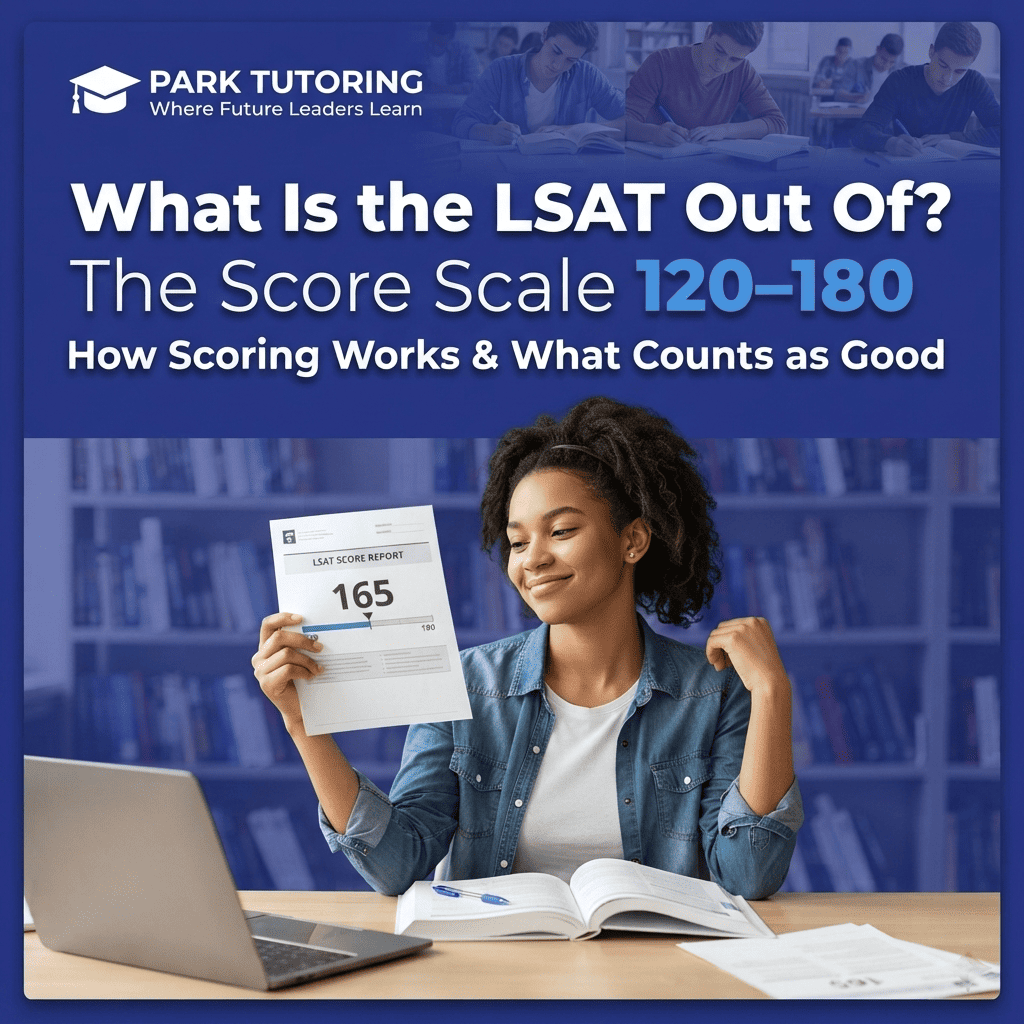
The LSAT is scored on a scale of 120 to 180, with 120 as the lowest possible score and 180 as the highest. Your raw score — the number of questions you answer correctly out of roughly 75-76 scored questions — gets converted to this 120-180 scale using a conversion table built fresh for each test administration.
Key Takeaways
- The LSAT scoring scale runs from 120 to 180, with 150 sitting at the exact mathematical midpoint.
- Your raw score (questions correct) gets converted to a scaled score using a table unique to that test date, not a fixed percentage.
- The LSAT Writing section is required but not scored on the 120-180 scale — it's sent to schools separately.
- As of the 2024 test format change, the scored sections are two Logical Reasoning sections and one Reading Comprehension section, with Logic Games removed.
- A "good" LSAT score depends entirely on where you're applying, since every law school publishes its own target range.
- You can retake the LSAT, but LSAC reports your full score history, and schools' policies on multiple scores vary by institution.
If you're just starting to research law school admissions, the first question is usually the simplest one: what is the LSAT out of, exactly? Once you know the scale, how it's calculated, and what counts as competitive, everything else gets easier — setting a target score, building a prep timeline, deciding whether a retake makes sense.
What is the LSAT scored out of?
The LSAT is scored on a 120 to 180 scale. That range hasn't moved in decades, through every content and format change LSAC has made. Every test taker, on every test date, walks away with a single scaled score somewhere in that band. No exceptions.
This isn't a percentage score. You won't see "85% correct" on a score report. Instead, LSAC takes your raw score — just the count of questions you got right — and runs it through a conversion formula built specifically for that exam to land on your final 120-180 number. Your score report also includes a percentile rank, which tells you how you stacked up against other test takers over a recent multi-year window. Law schools look at both numbers, not just the scaled score in isolation.
How does the LSAT's raw-score-to-scaled-score conversion work?
The LSAT converts your raw score using a conversion table unique to each test administration. That's why missing the same number of questions on two different test dates can produce slightly different scaled scores. LSAC calls this "equating," and it exists to smooth out small differences in difficulty between test forms.
What this means in practice: there's no single, universal answer to "how many can I miss and still get a 165?" The answer shifts slightly from test to test. LSAC designs each form so scores stay comparable across administrations, but the exact cutoff for each scaled score isn't locked in until after the test runs, based on how that particular form performed.
I've had students compare notes across test dates and get confused when a 10-question miss count produced a 165 for one and a 164 for another. That's not a scoring error. It's the equating process doing its job. Don't build your prep around hitting some exact miss count — aim to maximize accuracy and speed across the board, and let the conversion table sort itself out.
What is a good LSAT score?
A good LSAT score is one that falls within or above your target schools' published range. There's no magic number that works for everyone, no matter what you've heard at a prep session or read on a forum. Every ABA-accredited law school publishes the range of scores its admitted students typically earn — usually shown as a 25th-to-75th percentile band.
A score that's highly competitive at one school might sit below median at a more selective one, and be more than enough somewhere else with a different admissions profile. So skip the search for a generic "good" number. Look up the actual ranges published by the schools on your list and treat the top of that range as your working target.
Here's what that looks like in practice: a student applying to a mix of reach, target, and likely schools should expect to see a fairly wide spread across that list — sometimes a 10-point spread between the most and least selective school. Build your target score around the most selective schools you're applying to, not the least selective ones. That gives you the most room to maneuver once decisions start coming in.
What sections make up the LSAT score?
The LSAT's scored portion now comes from two Logical Reasoning sections and one Reading Comprehension section. LSAC pulled Logic Games (Analytical Reasoning) off the scored exam in August 2024. Each remaining section feeds questions into your raw score, which then gets converted to the 120-180 scale.
Logical Reasoning
This section gives you short passages, called stimuli, followed by a question asking you to spot an assumption, a flaw, an inference, or a way to strengthen or weaken an argument. With two scored Logical Reasoning sections now, this question type carries the heaviest weight in your overall score. If you're only going to drill one area hard, make it this one.
Reading Comprehension
Longer passages here — some standalone, some paired or comparative — followed by questions on structure, tone, main idea, and detail. It's dense, deliberately so. It mirrors the kind of reading you'll actually do in law school, which is partly the point.
Unscored (variable) section
Most test dates also include an extra, unscored section that looks like one of the scored types. LSAC uses it to test new questions for future exams. You won't know which section is the unscored one, so treat every section like it counts. Because as far as you know, it does.
Does the LSAT Writing section count toward my score?
No. The LSAT Writing section is required for a complete score, but it's not part of the 120-180 scale. It's a separate, timed writing sample you complete online, usually within a flexible window around your test date.
Law schools get your writing sample along with your scaled score and percentile, and admissions committees genuinely do read it — but it isn't scored numerically the way the multiple-choice sections are. Here's the part students miss: LSAC won't release your score at all until you've finished the Writing section. It's not optional, and it's not an add-on you can skip. I've seen students put it off for weeks, assuming it doesn't matter since it's unscored, then scramble when their score doesn't show up on the date they expected. Knock it out within a few days of test day.
How does the LSAT's scoring scale compare to the SAT and ACT?
The LSAT's 120-180 scale works nothing like the SAT or ACT, which trips up a lot of students coming straight out of high school testing.
|
Test |
Score Range |
Scoring Basis
|
|---|---|---|
|
LSAT |
120-180 |
Raw score converted via a test-specific scale |
|
SAT |
400-1600 |
Two sections (Reading/Writing + Math), each 200-800, summed |
|
ACT |
1-36 |
Average of four subject scores (English, Math, Reading, Science) |
Because the scales don't line up numerically, there's no clean way to translate an LSAT score into SAT or ACT terms. A 160 on the LSAT and a 1200 on the SAT aren't measuring the same thing on the same curve — each test has its own distribution and its own percentile structure. The one thing they share conceptually: all three use scaled scoring instead of raw percentages, and all three report percentiles next to the final number.
Can I retake the LSAT, and which score do schools see?
Yes, you can retake it. And LSAC reports your full testing history to every school you apply to — all scores from the current reportable period, not just your best one. LSAC caps how many times you can sit for the test within a testing year and over a longer stretch, so check the current policy before you plan out multiple attempts.
Most law schools focus primarily on your highest score, since that's the number used in rankings and official reporting. But admissions officers can see your whole history, and a pattern — a big jump, or a decline — can factor into how they read your application. This is different from undergrad testing, where superscoring across sections is common. The LSAT doesn't combine scores from different dates into a new composite. What you got on each test is what you got.
Here's the practical upshot: if your first attempt comes in lower than expected, a stronger second score typically becomes your headline number. But don't treat an early test as a throwaway practice run. Every score sticks to your record, so prepare seriously for each one.
What mistakes do students make when interpreting their LSAT score?
- Assuming there's a universal "good" score. Students fixate on a number they've heard is impressive without checking whether it matches the schools they're actually targeting. Check the published ranges for your specific list — that's the only number that matters.
- Confusing raw score with scaled score. It's tempting to assume missing 15 questions always produces the same scaled result. It doesn't. Each test has its own conversion table, so the same raw score can land differently across administrations.
- Skipping or rushing the LSAT Writing section. Since it doesn't factor into the 120-180 number, students sometimes treat it as unimportant and put it off indefinitely — not realizing their score won't be released until it's done.
- Over-testing without changing anything. Retaking the LSAT again and again without adjusting your prep approach rarely moves the needle much, and it just adds more entries to a history schools can see.
- Ignoring percentile context. Looking only at the 120-180 number without checking where that falls nationally makes it harder to actually understand the score.
|
Need a hand with lsat prep? Park Tutoring helps students understand exactly where their LSAT score stands, build a realistic target based on their actual law school list, and strengthen the specific reasoning and reading skills the test measures. We coach students through practice tests and review — we don't hand them shortcuts — so the skills carry over to test day. → Book a free consultation at parktutoring.com |
How do I actually start preparing for the LSAT?
Start with a full, timed diagnostic test. Find out your current scaled score, then work backward from your target schools' published ranges to set a real goal. That gives you a concrete gap to close instead of a vague feeling that you "need to study more."
From there, a workable sequence looks like this: review your diagnostic section by section to find which question types cost you the most points, build a study plan that leans into your weak spots without neglecting your strengths, and take periodic timed practice tests to see whether your scaled score is actually moving. Most students need several months of structured prep, not a two-week sprint — Logical Reasoning and Reading Comprehension both reward pattern recognition, and that only builds up through repeated, reviewed practice, not raw volume of questions grinded through. Register for your test date early. Popular sittings fill up faster than people expect. And leave yourself enough buffer to retake the test once if you need to, without crashing into application deadlines.
Subject Tutoring with Park Tutoring
Get 1-on-1 help from expert tutors with a plan built around your goals.