Share

Quick Answer
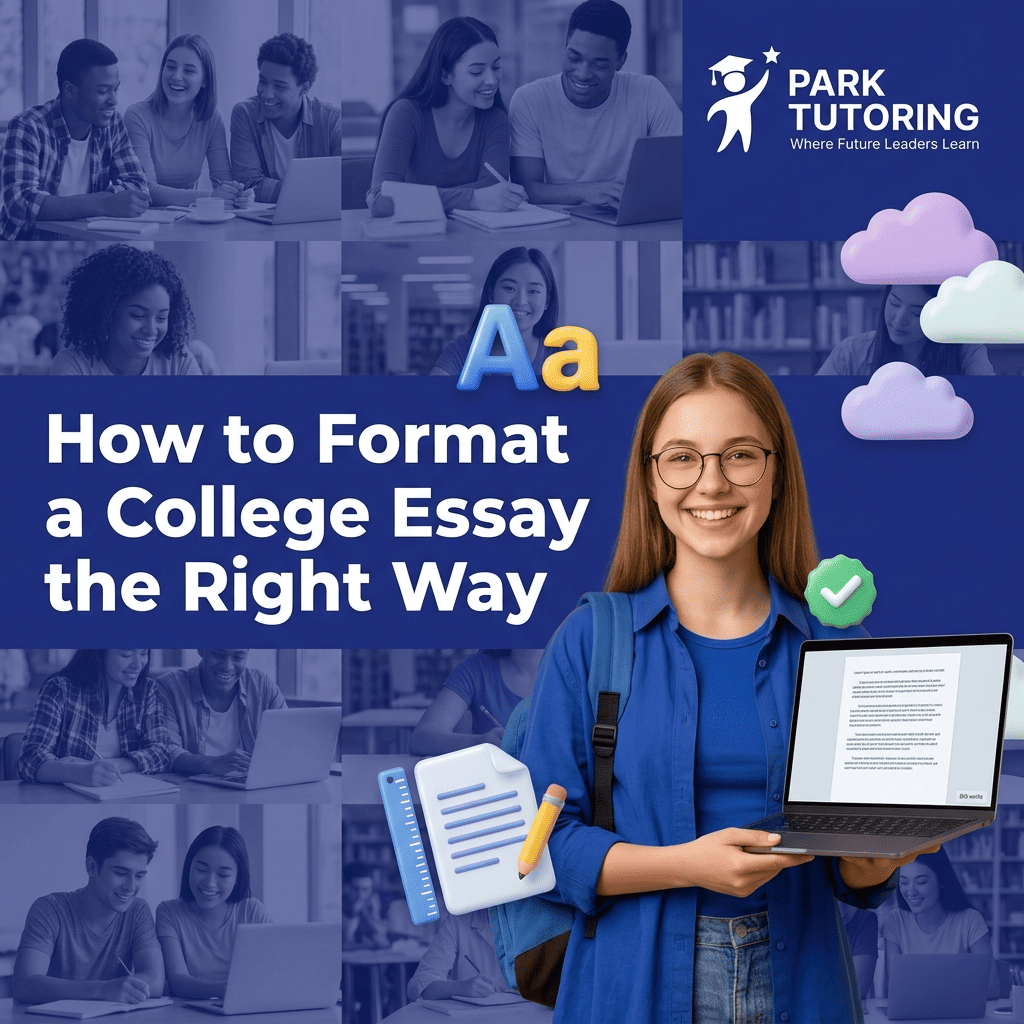
Most college essays go into a plain text box, so formatting is simple: no title, no header, clear paragraph breaks. If you must upload a file, use a 12-point standard font (Times New Roman, Georgia, or Arial), single or 1.5 spacing, and 1-inch margins. Keep the Common App essay within 250–650 words.
Key Takeaways
- Most essays go straight into a text box, so formatting is simpler than students think.
- Use a standard font — Times New Roman or Arial at 12 points — only when a document upload is required.
- The Common App personal statement has to land between 250 and 650 words. No exceptions, no wiggle room.
- Skip the title unless the application asks for one by name.
- Paragraph breaks do more for readability than font choice ever will.
- Check each school's supplemental portal on its own — the rules shift from school to school.
College essay formatting feels like a huge deal right up until you're staring at an empty text box with zero instructions. Here's the relief: admissions readers care about what you say, not what font you said it in. This guide covers margins, spacing, word counts, titles, and the small quirks that show up across the major platforms.
What font and font size should I use for a college essay?
Use something plain — Times New Roman, Georgia, or Arial at 12 points. Most applications, including Common App, Coalition App, and individual school portals, have you type or paste your essay into a bare text box. That box strips out your font entirely and shows everything in one system font. Font choice simply doesn't exist at that point.
It matters when a school wants a PDF or Word upload instead, which still happens for some supplements and scholarship applications. Stay conservative there. No script fonts, no decorative headers, nothing tiny or oversized. A 12-point serif font reads as professional and, more importantly, invisible — which is the goal. Admissions officers get through hundreds of essays a season. Give them nothing to trip over. If you're ever unsure, default to Times New Roman at 12 points and move on. That's one decision you don't need to agonize over.
Should I include a title on my college essay?
No — skip it unless the application specifically asks for one. The Common App personal statement has no title field at all. You pick your prompt and start typing. Adding "My Journey" or "Finding My Voice" above the text in that box just burns word count for nothing.
Some supplements and scholarship applications do have a separate title field, usually when the prompt is more creative or essays get compared side by side. If that field exists, use it. A specific, odd little title can actually help your essay stand out in a stack. "The Summer I Learned to Fail" beats "My Journey" every time. But if there's no field for it, don't invent one inside your response. That's just wasted real estate.
What are the margin and spacing requirements for a college essay?
Most essays don't need specific margins or spacing because you're typing into an online box, not printing a page. The platform handles the visual layout for you. This trips up a lot of students — there's no secret "1-inch margin, double-spaced" rule hiding somewhere for the Common App essay itself.
The exception shows up when a school asks for an uploaded file — some supplements, arts portfolio statements, outside scholarship essays. Then use normal business formatting: 1-inch margins, single or 1.5 spacing. Double spacing belongs to drafts you're sharing with a teacher for feedback, not to a final submission. Always read the specific upload instructions on that page. Some schools do specify a format, and ignoring it creates a weird, avoidable first impression before anyone's even read your opening line.
How do I actually start writing and formatting my essay?
Draft in a plain word processor first, not inside the application itself. Write and revise in Google Docs or Word, where you get a live word count, spell-check, and the ability to share the draft with a parent, teacher, or tutor. Copy and paste into the application only once the essay is close to done.
Once it's in the box, check these immediately:
- Did the paragraph breaks survive the paste? Some portals flatten everything into one block of text. Preview before you submit.
- Do smart quotes and special characters still look right? Curly quotes, em dashes, and accented letters sometimes turn into odd symbols when pasted out of Word.
- Does the platform's word count match your document's? They don't always agree, and the platform's number is the one that counts.
- Is there stray spacing or leftover HTML junk sitting at the start or end of the box?
Drafting outside the portal also just protects you. If your browser crashes or the session times out, you haven't lost three hours of work.
How does college essay formatting differ by application platform?
Formatting rules shift slightly between the Common App, Coalition App, and individual school portals. Check each one — don't assume they're identical.
|
Platform |
Essay entry method |
Word limit (personal statement) |
Formatting notes
|
|---|---|---|---|
|
Common App |
Plain text box |
250–650 words |
Strips formatting; preview before submitting |
|
Coalition App |
Plain text box |
Varies by school, often similar range |
Some schools set their own limits |
|
UC Application (UC PIQs) |
Plain text box |
350 words per response (4 of 8 prompts) |
No single "personal statement"; four shorter responses |
|
School-specific portals |
Text box or document upload |
Varies widely |
Always check individual instructions |
The UC system is the odd one out. Instead of one long personal statement, you write four shorter Personal Insight Questions, capped at 350 words each, picked from a list of eight prompts. With that little room, tight formatting matters even more than on the Common App — every paragraph has to earn its place.
How long should a college essay be, and does that affect formatting?
Length limits are strict, and they should shape your formatting choices, not the other way around. The Common App personal statement sits between 250 and 650 words. Most strong essays land close to 600–650 — they use almost the entire space without padding to get there. Supplements vary far more: 50-word "why this school" answers, 250-word short responses, occasional 500-word supplements.
Because space is tight, formatting should serve economy. Short paragraphs that each do one job. Minimal dialogue, which burns words fast. No redundant topic sentences restating what the paragraph already shows. A 650-word essay packed into six long paragraphs tends to drag. The same material split into eight or nine tighter ones moves faster and reads more confident. For very short supplements — 100 words or under — a single paragraph is usually right. Breaking those up just feels choppy.
What are common college essay formatting mistakes to avoid?
- Adding a title nobody asked for. It eats into a character-limited field for no benefit.
- Writing one giant paragraph. A dense wall of text wears out an admissions officer who's reading hundreds of these a week, even if the writing underneath is good.
- Ignoring the platform's live word counter. Your draft's count and the portal's count can differ. Trust the official one before you hit submit.
- Using decorative fonts or colored text in uploaded files. It looks like you're compensating. Let the writing do the work.
- Skipping a reread after pasting. Missing paragraph breaks, stray symbols, broken quotation marks — these show up in the actual text box, not your draft, so check again after you paste.
- Reusing one school's formatting rules for another school's portal. Word limits and upload requirements aren't universal. That's an easy mistake, and an easy one to avoid if you just slow down.
|
Need a hand with college application writing? Park Tutoring's college essay coaches help students structure, tighten, and format their personal statement and supplemental essays for every platform — Common App, Coalition App, and UC PIQs — while making sure the student's own voice stays front and center. We coach the process, not write the essay for you. → Book a free consultation at parktutoring.com |
Should I format supplemental essays differently from my personal statement?
Yes — supplements need a tighter, more direct approach because the word limits are shorter and the prompts more specific. A 650-word personal statement has room to breathe: a setup, a turning point, a reflection. A 150-word supplement doesn't have that luxury. Lead with your most concrete point in the first sentence. Skip the warm-up paragraph entirely. There's no room for it.
Some supplements ask for lists, short-answer grids, or "describe yourself in one word" formats instead of full paragraphs. Follow exactly what's asked. If a school wants a bulleted list of extracurricular highlights, don't hand them a paragraph instead — that's a mismatch readers notice right away. And reread the specific prompt each time, even if you've seen a similar one before. Schools reuse phrasing but quietly change word caps and structure from year to year, and assuming last year's rules still apply is how students end up over the limit.
SSAT Prep with Park Tutoring
Get 1-on-1 help from expert tutors with a plan built around your goals.